
"arabica coffee farming"
5000 article(s) found

Introduction to the Origin of Ecuadorian Coffee production area description of the taste and flavor of Ecuadorian coffee
Professional coffee knowledge exchange more coffee bean information please follow the coffee workshop (Wechat official account cafe_style) Ecuador has great potential, the output of coffee with exotic flavor, quality is also recommended, but at present the biggest problem is production, Ecuador's annual coffee export volume, only 100 containers (1 container = 40, 000 pounds) of washed Arabica coffee, one

Classification of Ugandan coffee beans in Uganda, the second largest coffee producer in Africa
Uganda is the second largest coffee producer in Africa, the fourth largest Robusta coffee producer and the tenth largest coffee producer in the world. One out of every 10 coffee farms in the world is located in Uganda, where 1.7 million coffee households account for 10 per cent of global farms. Coffee production in Uganda may still be feasible in the coming decades, but future environmental scenarios require us to start now.

Seven grades of Mandenin Coffee beans introduce Fine Coffee Nyeri Central Mountain area
Established in 1950, Kenya DORMANS (Berman Manor) is one of the largest coffee producers in Kenya. DORMANS offers the highest international level of Kenyan specialty coffee (Specialty Coffee), 100% Arabica coffee beans from a single producing area, and real gourmet coffee (Gourmet Coffee). Kenyan coffee enjoys a high international reputation because of its excellent quality.

Seven grades of Mandenin Coffee beans introduce Fine Coffee Nyeri Central Mountain area
Established in 1950, Kenya DORMANS (Berman Manor) is one of the largest coffee producers in Kenya. DORMANS offers the highest international level of Kenyan specialty coffee (Specialty Coffee), 100% Arabica coffee beans from a single producing area, and real gourmet coffee (Gourmet Coffee). Kenyan coffee enjoys a high international reputation because of its excellent quality.

A brief introduction to the treatment method of grinding degree and baking degree of Columbia Huilan boutique coffee beans with heavy texture
Arabica coffee accounts for about 65% and 80% of the world's coffee beans. Arabica coffee beans are longer, flatter, more complete and greener. Arabica coffee has a varied and broad potential flavor. Arabica coffee produced in different regions, different elevations and different climatic areas usually has its own characteristics and smells like grass when unroasted.

Guatemala's Seven Major Coffee Producing Areas Coffee Bean Farm
Each region of coffee beans have their own characteristics, but also for Guatemala won a lot of international praise, especially Antigua it sour, sweet, mellow texture is how perfect harmony; add a hint of smoke, more emphasis on its mystery, after tasting you will have reason not to let yourself look for alternatives everywhere. Guatemala coffee beans are mostly cultivated in volcanic areas at high altitudes where the soil is highest

A brief introduction to the treatment method of grinding degree and baking degree of Columbia Huilan boutique coffee beans with endless aftertaste
Colombian Coffee growers High quality Coffee Arabica Coffee in Colombian Coffee Arabica Coffee has to be mentioned in Colombian coffee species (scientific name Coffee Arabica). Arabica coffee trees grow between 900m and 2000 Michael degrees above sea level; they are hardy and the suitable growth temperature is 1524 ℃; they need more humidity and the annual rainfall is not less than 1500.
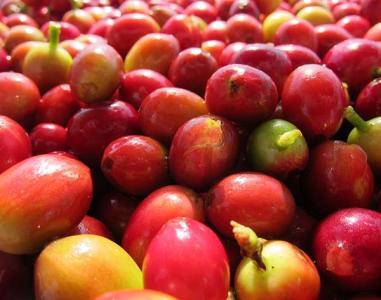
How many Arabica species in Ethiopia have their names?
Since ancient times, Ethiopians have planted, harvested, treated and cooked by hand. In the 1970s and 1980s of industrialization, the country also benefited from misfortune because it promoted socialism and retained small-scale production under the prohibition of the military regime Derg. Until modern times, the planting mode of farmers is also quite primitive. In the western forest region (Kaffa, Illubabor), they will

Brazilian Coffee Manor Stonehenge Farm Itagucu Brazilian Coffee Variety New World Mundo Novo
Professional baristas please follow the coffee workshop (Wechat official account cafe_style) Mundo Novo bean seed name is Portuguese, which means New World, widely grown in Brazil, especially in large coffee plantations, up to 35% of Brazilian coffee comes from New World beans. New World is Red Bourbon and Sumatra (one of Sumatra; Tibica) two Arabica beans

Introduction to the description of taste and flavor of high-quality coffee beans in Ethiopian coffee farm
Grade of Ethiopian coffee: Ethiopian washed coffee Yega Chuefei G1 G2 Sidamo (Yirgacheffe, Sidamo) has the highest grades 2 and 3 (G2, G3), while sun-processed coffee in eastern Ethiopia is mostly grade 4 or 5 (G4, G5). In many cases, level 4 coffee is marked as level 5 in order to reduce taxes. At present, the classification is not uniform and there are
Does the growing environment of Daquan coffee affect the quality and flavor of coffee beans growing countries and producing areas in the world?
The ideal conditions for the growth of coffee trees all over the world are located in the equatorial zone between 25 degrees north latitude and 30 degrees south latitude, known as the bean belt. Fussy Arabica coffee grows best in high-altitude fertile soil, while healthier robusta coffee prefers higher temperatures and thrives on lower ground. What affects coffee?

Colombian Arabica coffee beans hit a 13-year low. How to transform Colombian Coffee?
Professional coffee knowledge exchange more coffee bean information Please follow the coffee workshop (Wechat official account cafe_style) recently coffee bean futures trading prices on the international market have continued to decline, seriously affecting the earnings of coffee growers in Colombia. In order to deal with this situation, many coffee growers began to adjust their business ideas and develop coffee tourism to increase the added value of the coffee industry.

Kenya AA boutique manor coffee beans Kangguqi Kangocho Farm Gikanda FCS Cooperative
Professional coffee knowledge exchange more coffee bean information please follow the coffee workshop (Wechat official account cafe_style) Kenya AA boutique manor coffee beans Kangguqi Kangocho farm Gikanda FCS cooperative flavor and taste characteristics? Kenya is a model country for producing fine coffee beans. Coffee was introduced from Britain in 1900, and only traditional Arabica trees were planted until 1900.

A brief introduction to the flavor, taste and aroma characteristics of Colombian Huilan boutique coffee beans
Arabica coffee has a varied and broad potential flavor. Arabica coffee produced in different regions, different elevations and different climatic areas usually has its own characteristics. It smells like grass when it is not roasted, and after proper roasting, it shows fruity (light baked) and caramel sweet (deep roasted). Her excellent flavor and aroma make her
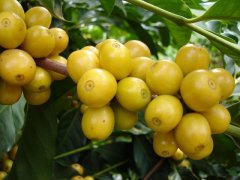
Kenya Gikanda Cooperative Kangocho Kangguqi Farm details Kenya AA
For the exchange of professional baristas, please follow the coffee workshop (Wechat official account qianjiecoffee) Kenya AA Kangguqi Kangocho Farm Kenya is a model country for producing fine coffee beans. Coffee was introduced from Britain in 1900, and only traditional Arabica did not have the best bourbon species of SL28 and SL34 in Kenya until 1950. All water is collected and treated.

Introduction to Mexican Coffee | Organic Coffee | Mexican Coffee characteristics | Arabica Coffee beans
Professional coffee knowledge exchange more coffee bean information please follow the coffee workshop (Wechat official account cafe_style) Mexico organic coffee introduction: Mexico is one of the largest producers of organic certified coffee, because of geographical factors, mostly sold to the United States. The country's coffee industry began in the 19th century and was introduced through Jamaica. It is mainly planted in Arabica varieties and producing areas.

The production of coffee, the planting technology of coffee manor.
Arabica coffee and Robbite coffee are harvested once every 3 to 4 years, and their lifespan varies due to different production conditions and different degrees of care (usually 20 to 30 years, after which they have to be replanted). Both varieties need plenty of sunlight and moisture. Arabian coffee trees like the seasonal climate of 15-24 ℃; Robbins like warm.
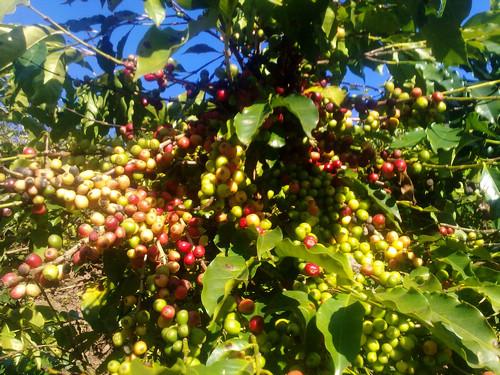
World boutique coffee beans: introduction to the classification of Zimbabwe ((Zimbabwe) Zimbabwe) coffee beans
Zimbabwe has been producing quality Arabica coffee since 100 years ago. But it was almost wiped out by insect pests around 1920. Since 1950, Zimbabwe has been equipped to produce quality coffee with the migration of coffee farmers from India and Kenya to Zimbabwe. The coffee-growing areas of Zimbabwe are mainly distributed in the northeast of the Chimanimani Mountains. The mountain range

Have you thought about how climate change will affect coffee farming?
Weixin Official Accounts vdailycom found that by the end of the century, climate change could make about half of Ethiopia's coffee-growing areas unsuitable for coffee cultivation; however, the study is not all bad news, and the authors suggest that the total area of coffee cultivation is expected to quadruple through coffee-growing area relocation, afforestation and forest protection

The planting characteristics of Coffee Bean in the World
Coffee beans from various countries, Asia, most of the Buddhist countries in Asia, the atmosphere of drinking coffee is generally not popular, so most of the coffee produced is exported to Europe and the United States. It is generally known that selected coffee is produced in countries such as Indonesia, Yemen and Papua New Guinea in Asia. In fact, as early as more than 100 years ago, the Chinese nation planted coffee. 1. At the end of the 18th century in Taiwan, coffee